
2009 World Baseball Classic rosters
Rosters for the 2009 World Baseball Classic tournament.

Wikipedia / Wikimedia Commons
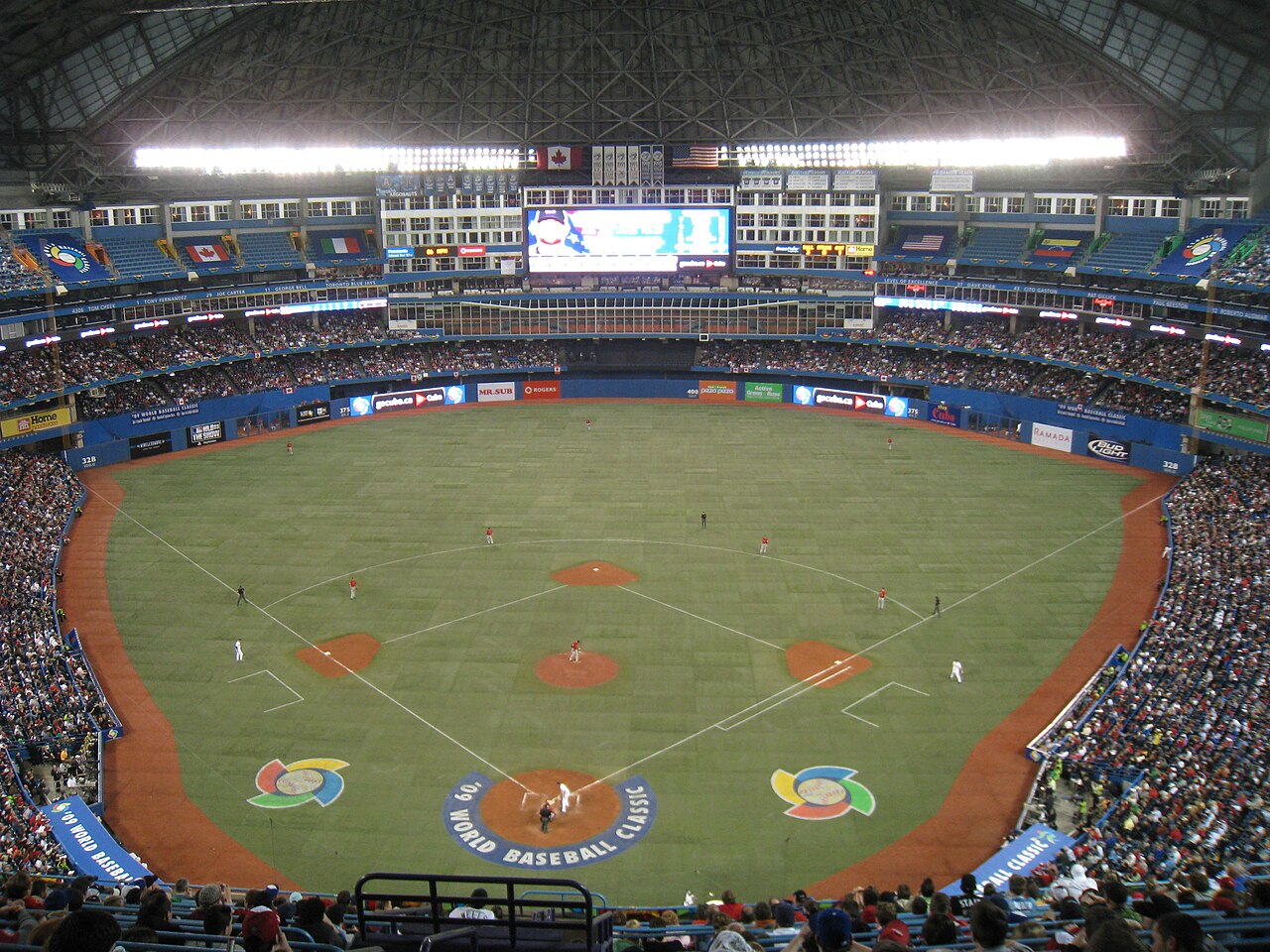
The 2009 World Baseball Classic rosters list the players and coaching staff for each of the 16 national teams that competed in the tournament, which began on March 5, 2009. Each federation submitted a 45-man provisional roster by January 19, 2009, and a final 28-player roster by February 24, with a minimum of 13 pitchers and two catchers. Rosters could be altered for injury before the tournament, but during competition changes were only allowed between rounds.
- tournament_start
- March 5, 2009
- provisional_roster_deadline
- January 19, 2009
- final_roster_deadline
- February 24, 2009
- minimum_pitchers
- 13
- minimum_catchers
- 2
- pool_a_teams
- China, Chinese Taipei, Japan, South Korea
- pool_b_teams
- Australia, Cuba, Mexico, South Africa
Lore & Background
The 2009 World Baseball Classic featured 16 national teams divided into four pools. Pool A included China (managed by Terry Collins), Chinese Taipei (managed by Chih-Hsien Yeh), Japan (managed by Tatsunori Hara), and South Korea (managed by Kim In-sik). Pool B comprised Australia (managed by Jon Deeble), Cuba (managed by Higinio Vélez), Mexico (managed by Vinny Castilla), and South Africa (managed by Rick Magnante).
Reader's Guide
The rosters for the 2009 World Baseball Classic represent the official player and coaching selections for each participating nation. The tournament structure required teams to submit a 45-man provisional roster by January 19, 2009, followed by a final 28-man roster by February 24. Each final roster had to include at least 13 pitchers and two catchers. Injury substitutions were permitted before the tournament began, but during the competition, roster changes were restricted to breaks between rounds. The rosters list team affiliations and player ages as of the opening day, March 5, 2009. Notable managers included Davey Johnson for the United States, Felipe Alou for the Dominican Republic, and Luis Sojo for Venezuela. The rosters provide a snapshot of international baseball talent at that time.
Did You Know?
- Each team's final roster had to include a minimum of 13 pitchers and two catchers.
- Roster changes during the competition were only allowed between rounds, not during pool play.
- Team affiliations and player ages on all rosters are current as of the opening day of the tournament, March 5, 2009.
- The United States was managed by Davey Johnson in the 2009 World Baseball Classic.
A Tournament Reborn After a Global Pause
The 2023 World Baseball Classic was shaped as much by what it overcame as by the baseball it ultimately produced. Originally slated for 2021, the event was shelved in May 2020 when the pandemic forced a full cancellation of the qualifying round that had been planned for March in Tucson, Arizona. World Baseball Classic Inc. eventually reset the calendar, pushing the Africa and Europe qualifiers to mid-September 2022 and the Americas, Asia, and Oceania round to late September and early October. The rescheduled tournament also arrived with a larger footprint: the field grew from sixteen to twenty national teams. Every nation that had competed in 2017 earned automatic entry, while the four remaining berths were decided through those delayed qualifying pools. The result was a tournament that carried the weight of a two-year gap, a pandemic-era disruption, and a broader global stage than any previous edition.
Japan's Undefeated March to a Record Third Crown
Japan entered the 2023 World Baseball Classic as the tournament's most decorated nation and left with a title that cemented their legacy further. Their path to the championship was flawless: the Japanese squad finished the entire event without a single loss, a feat only the Dominican Republic had previously accomplished in 2013. In the final, Japan edged defending champions the United States three runs to two in Miami, claiming their record-extending third WBC crown. Shohei Ohtani was the undisputed star, earning both the Pool B Most Valuable Player honor and the overall tournament MVP award. The championship run also generated extraordinary television numbers in Japan. The quarterfinal against Italy shattered the previous Japanese WBC viewership record, drawing an average household rating of 48.0 percent and roughly 38.2 million viewers. The earlier pool-stage clash with South Korea had already captured 44.4 percent of Japanese households, underscoring how deeply the tournament resonated across the archipelago.
A Stadium and Broadcast Phenomenon
The 2023 edition set attendance and viewership benchmarks that had never been reached in the tournament's history. Across the four group-stage venues in Taichung, Tokyo, Phoenix, and Miami, a combined 1,010,999 fans passed through the gates in the first round alone—nearly double the previous WBC record. Tokyo's Pool B drew 361,976 spectators, while Miami's Pool D attracted 295,850. Total attendance across all rounds reached 1,306,414, the highest figure the Classic has ever recorded. On television, the numbers were equally staggering. The Japan-versus-South Korea pool game averaged 29.9 million Japanese viewers and 2.7 million in Korea, with 62.3 million Japanese watching at least one minute of the broadcast. That Korean rating stood as the second-highest WBC game ever in South Korea, behind only the 2009 Japan-Korea final. The Japan-Italy quarterfinal then pushed past even those marks, confirming that the tournament had become a genuine cultural event on both sides of the Pacific.
Newcomers, Comebacks, and a Long Drought
The expanded twenty-team field brought fresh stories to the 2023 Classic. The Czech Republic, Great Britain, and Nicaragua each made their debut appearance in the tournament's history, while Panama returned to the stage for the first time since 2009 after missing the two intervening editions. On the other side of the ledger, South Africa endured a third consecutive failure to qualify, extending their active appearance drought to fourteen years—the longest in WBC history, as they have not competed since the 2009 tournament. Brazil and Spain also missed the cut for a second straight cycle. Pool construction reflected a deliberate balance: organizers kept the four 2017 semifinalists—Japan, the Netherlands, Puerto Rico, and the United States—in separate pools, as they did with the three host nations of Japan, the United States, and Taiwan. Remaining placements factored in WBSC World Rankings, competitive balance, and commercial and geographic considerations, ensuring that the bracket felt both competitive and globally representative.
Gallery
Frequently Asked Questions
What are the 2009 World Baseball Classic rosters?
They are the official player and coaching-staff lists for each of the 16 national teams that competed in the tournament, which opened on March 5, 2009. Every participating federation was responsible for putting together and submitting its own squad.
How big were the rosters for the 2009 World Baseball Classic?
Each country first filed a 45-man provisional list by January 19, 2009, then cut it to a final 28-player roster by February 24, 2009. Injuries could still force swaps before the first pitch, but once play began, changes were only permitted between rounds.
What were the minimum pitching and catching requirements on a 2009 WBC roster?
Every team had to carry at least 13 pitchers and two catchers on its final 28-man roster. Those minimums guaranteed each squad had adequate depth in those critical positions throughout the tournament.
Which countries were grouped together in Pool A of the 2009 World Baseball Classic?
Pool A consisted of China, Chinese Taipei, Japan, and South Korea. All four East Asian nations were drawn into the same opening-round group.
Could teams alter their rosters once the 2009 WBC tournament was underway?
No mid-game changes were allowed; any roster adjustments could only be made between rounds. Before the tournament started, however, injury-related replacements were still permitted up until the opening game.
More in Baseball tournament squads 1-19
Spotted an error? Know more?
This is a living reference — every entry is fact-audited, and reader corrections feed straight into our audit queue. Suggest an edit · See this site's audit record